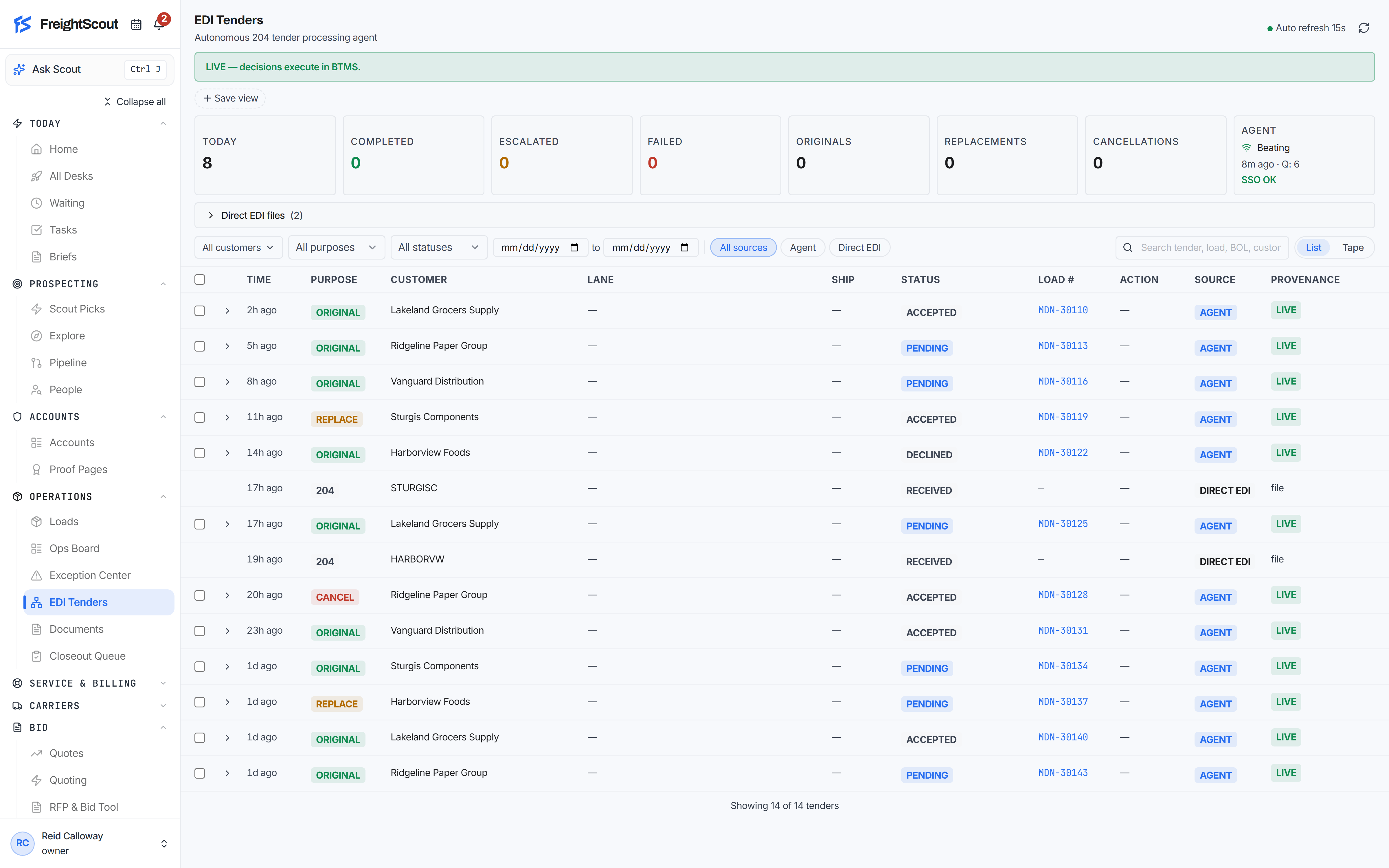
Lanes, loads, carriers and tenders are first-class objects in FreightScout, not custom fields bolted onto a generic CRM. That's why it can see a shipper drifting from its tender pattern, price both sides of a lane, and speak every TMS at once.
Salesforce and the point tools were built for software deals and support tickets. To make them fit freight, someone hand-builds custom objects, and the "customer health" score still can't tell that a shipper who stopped tendering ATL→MIA is about to leave. FreightScout starts from freight, so the intelligence is native, not retrofitted.
Because tenders, lanes and margins are first-class, FreightScout can fuse tender-volume collapse, comms cadence and margin drift into a churn score no generic tool can compute, and price both the shipper sell and the carrier buy on the same lane.
See freight-native churnWhatever TMS you're on, FreightScout normalizes it into one model, then connects to the tools around it by capability, not vendor lock-in.